Introduction to Bioinformatics using Action Labs
Below you can find an Introductory Bioinformatics book that I wrote with the help of Jean-Louis Lassez and Stephen Sheel.
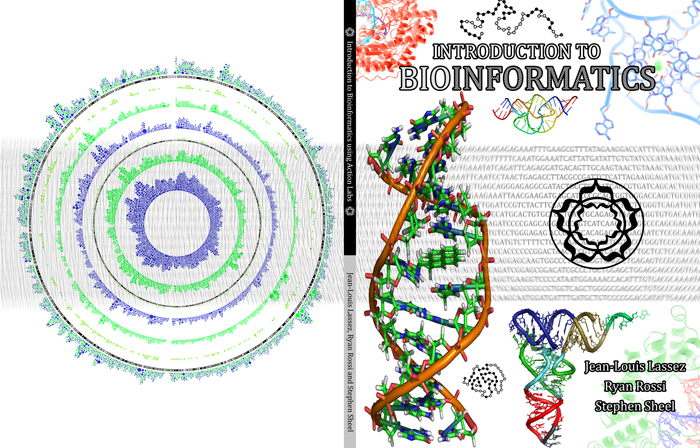
Bioinformatics is the application of computational techniques and tools to analyze and manage biological data. This book provides an Introduction to Bioinformatics through the use of Action Labs. These labs allow students to get experience using real data and tools to solve difficult problems. The book comes with supplementary powerpoints, papers, and tools. The labs use data from Breast Cancer, Liver Disease, Diabetes, SARS, HIV, Extinct Organisms, and many others. The book has been written for first or second year computer science, mathematics, and biology students. The book is published by the Digital University Press.
[pdf version] (6.2 MB)
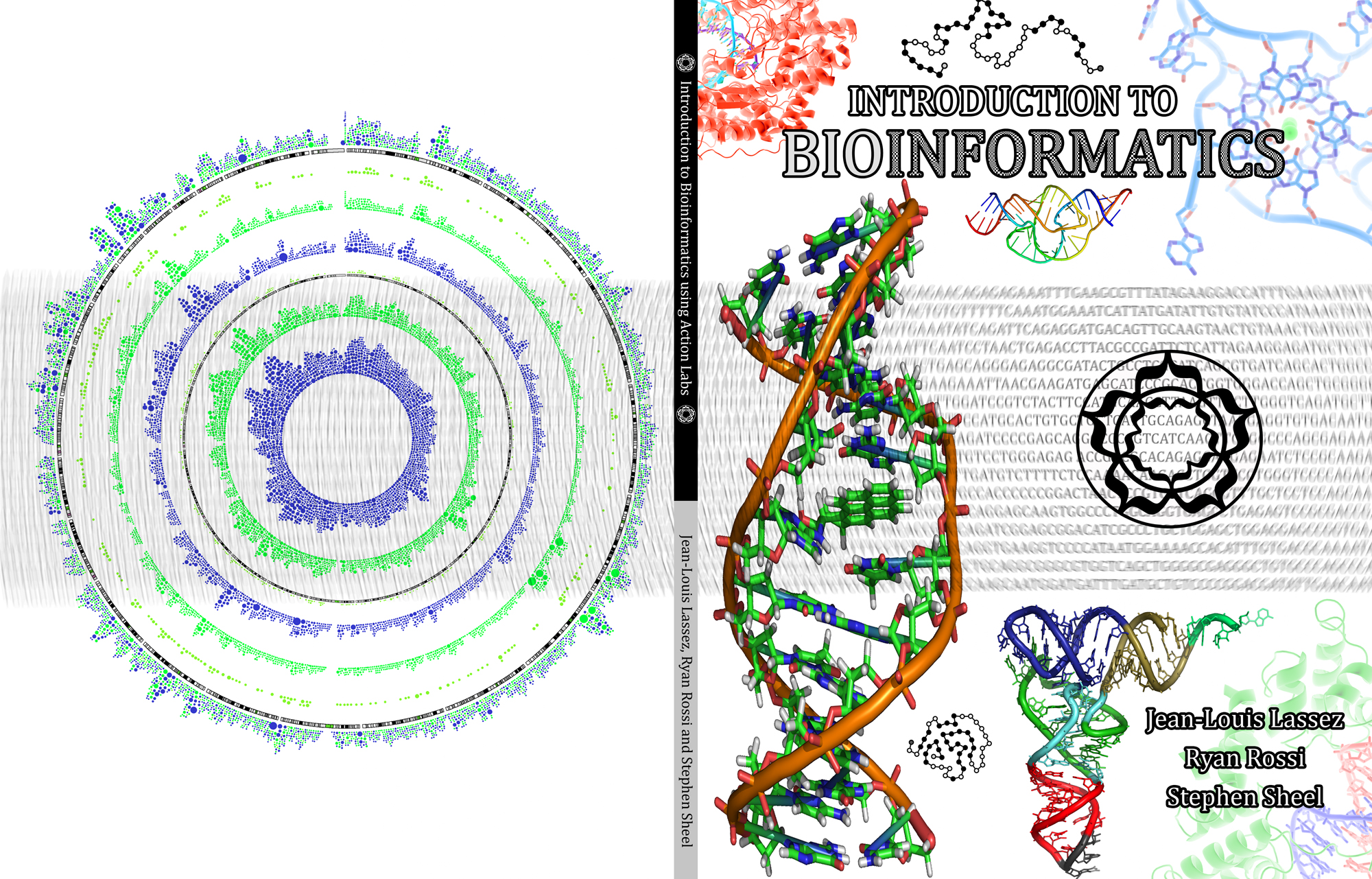
Bioinformatics is the application of computational techniques and tools to analyze and manage biological data. This book provides an Introduction to Bioinformatics through the use of Action Labs. These labs allow students to get experience using real data and tools to solve difficult problems. The book comes with supplementary powerpoints, papers, and tools. The labs use data from Breast Cancer, Liver Disease, Diabetes, SARS, HIV, Extinct Organisms, and many others. The book has been written for first or second year computer science, mathematics, and biology students. The book is published by the Digital University Press.
[pdf version] (6.2 MB)
Table of Contents
- What is Bioinformatics
- Exploring Frameshifts
- Bioinformatics Tools
Chapter 1. Introduction to Bioinformatics
- Introduction to Sequence Analysis
- Exploring BLAST Part 1
- Exploring BLAST Part 2
- Exploring FASTA
Chapter 2. Introduction to BLAST and FASTA
- Understanding the BLAST Programs
- Sequence Information Searching
- Genes and Diseases
- Protein Database Searching
- Jurassic Park
- HIV Patient Research
- SARS Exploration
- Extinct Organism Research
- Cancer BLAST Experiment
- Scoring Matrices
Chapter 3. BLAST Analysis and Applications
- Introduction to CLUSTAL
- Introduction to PSI-BLAST
- Translation Initiation Sites
- Protein Structure
- Protein Function
Chapter 4. Advanced Bioinformatics Tools
- K-means Clustering
- Hierarchical Clustering
- Introduction to Maxim Toy and Data Modifier
- Introduction to Universal Frame Finder
- Maxim Parameter Project
- Breast Cancer Analysis
- Liver Disease Analysis
- Hepatitis Analysis
Chapter 5. Classification and Pattern Recognition
- HMM and Protein Sequence Analysis
- Introduction to Pfam
- Singular Value Decomposition and Latent Semantic Analysis
Chapter 6. Advanced Topics
- Crick's Hypothesis Revisited: The Existence of a Universal Coding Frame
- Automated Discovery of Translation Initiation Sites and Promoter Sequences in Bacterial Genomes
Appendix. Supplementary Papers
- Glossary
- Index